Picking a controller board is often the first purchasing decision for a school robotics or IoT lab. Each board solves a different learning stage—and buying the wrong one can either bottleneck advanced projects or overwhelm beginners.
1. Arduino Uno: best for first circuits (Classes 5 to 8)
The Arduino Uno runs at 5V, survives beginner wiring mistakes remarkably well, and pairs cleanly with breadboards, ultrasonic sensors and DC motor drivers. Students focus on logic and cause-and-effect without fighting operating systems.
- Simple USB upload and block-coding support
- 5V tolerant GPIO pins suited for classroom modules
- Thousands of proven classroom experiments
2. ESP32: best for IoT and connected robotics (Classes 8 to 12)
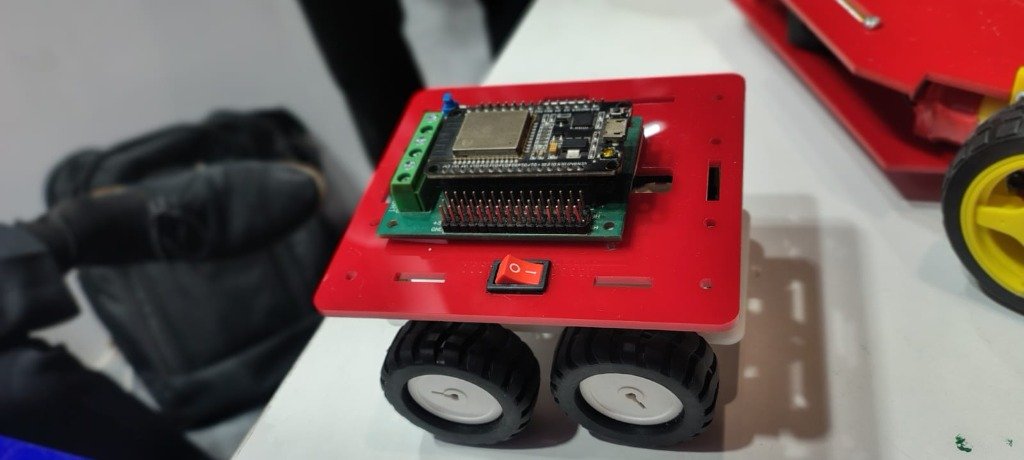
When students are ready to send sensor readings to a phone or cloud dashboard, ESP32 brings built-in Wi-Fi and Bluetooth on a dual-core processor at nearly the same cost as an entry board.
3. Raspberry Pi: best for Linux, Python and AI vision (Class 10 to College)
A Raspberry Pi is a full single-board computer capable of running camera pipelines, OpenCV models, and multi-service local dashboards. Use it when projects need vision, audio processing or heavy compute.
Quick checklist
- Classes 5–8: Arduino Uno + sensor shields
- Classes 8–12: ESP32 for Wi-Fi / IoT telemetry
- Class 10–College: Raspberry Pi for vision and Linux