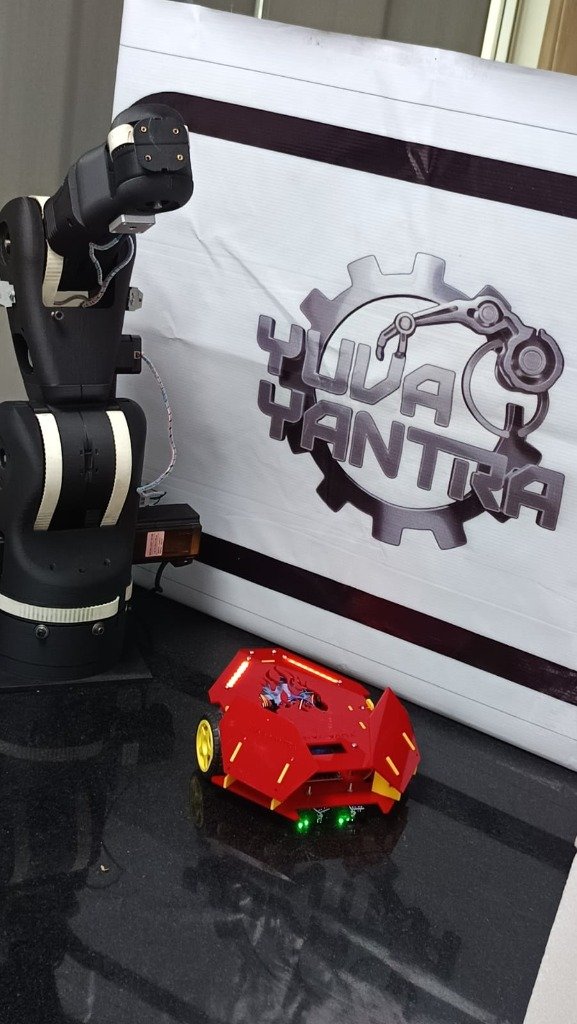
Robotic arms are showing up in Indian MSMEs faster than ever, but buying an arm before mapping the cell around it leads to expensive surprises. Here is what determines whether a robotic arm pays back on a small factory floor.
1. Where a robotic arm pays back quickly
Repetitive machine tending, consistent pick-and-place between two fixtures, palletising standard cartons, and repetitive dispensing are ideal tasks. Whenever part presentation is predictable, cycle times become steady and scrap drops.
2. What an arm cannot fix on its own
An arm cannot compensate for parts arriving in tangled heaps unless you pair it with feeder bowls or 2D/3D vision. Likewise, the gripper, safety light curtains, and PLC interlocks often cost as much engineering time as the arm itself.
- Check payload including the gripper weight, not just the part
- Account for reach at full extension with wrist orientation
- Plan safety fencing or cobot force-limiting zones upfront
3. Start with a single-cell pilot
At YuvaYantra, we test the gripper, fixture, and cycle time on a working pilot before scaling across machines. Operators are trained alongside commissioning so maintenance stays local.
Quick checklist
- Part weight + gripper weight calculated
- Cycle time benchmarked against manual cell
- Safety perimeter and e-stop interlocks planned